


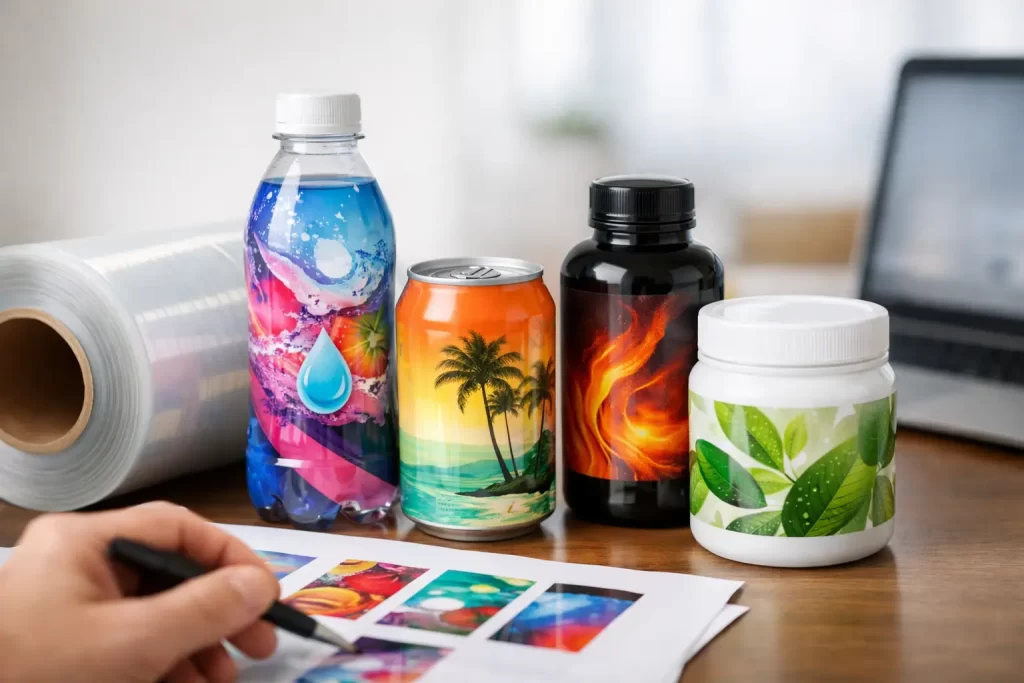
A shrink sleeve project usually looks simple at the start. Then the first sample arrives, the fit is off around the shoulder, the artwork shifts over the seam, or the finish does not perform well on the filling line. If you are figuring out how to order custom shrink sleeves, the fastest way to avoid delays is to treat the order as a technical packaging decision, not just a print purchase.
For brand owners, procurement teams, and packaging managers, shrink sleeves sit at the intersection of branding, machine performance, and product protection. A good order process aligns all three early. That means defining the container geometry, selecting the right film, preparing artwork for distortion, and confirming production conditions before the order is released.
How to order custom shrink sleeves without costly revisions
The most efficient shrink sleeve orders start with the container, not the design. Before any quotation or artwork review, gather the exact bottle or container dimensions, including body diameter, overall height, shoulder shape, taper, and any unusual contours. Even small geometry changes affect shrink behavior, decoration alignment, and sleeve application.
If your product uses multiple pack sizes, do not assume one sleeve structure will suit every SKU. Similar-looking containers may need different layflat widths, cut heights, or distortion compensation. This is especially relevant for food, beverage, home care, and healthcare products where visual consistency matters across a range.
The next step is defining the application itself. A full-body sleeve, a tamper-evident neck band, or a combo format each requires different planning. Full-body sleeves prioritize shelf impact and contour fit. Tamper bands focus more on security, tear behavior, and clean separation. Combo applications must balance branding and evidence of opening without creating line inefficiencies.
At this stage, it also helps to state the operating conditions clearly. Is the sleeve going onto a hot-filled beverage bottle, a personal care container exposed to moisture, or a chemical product that may face aggressive handling? End-use conditions influence film choice, ink performance, coating selection, and even seam integrity.
Start with the specifications your supplier actually needs
A strong RFQ for shrink sleeves includes more than artwork and quantity. Your manufacturing partner will usually need the container drawing or physical sample, product application type, annual or per-run volumes, sleeve dimensions if known, and information about the application line. If the sleeve will run on automated equipment, line speed and machine setup matter.
Material selection is one of the biggest decision points. PETG, PVC, OPS, and other films each offer different shrink characteristics, clarity, cost profiles, and sustainability implications. There is no universal best option. A highly contoured container may need greater shrink performance, while a simpler shape may allow more flexibility. If your business has sustainability targets, that should be discussed early because it may affect film structure and recycling compatibility.
Print process also depends on the order profile. Longer runs may suit one production method, while shorter or versioned jobs may benefit from another. If you need multiple SKUs, variable information, or frequent artwork changes, that should be built into the production plan from the start rather than addressed after approval.
Color expectations should be precise. Brand teams often focus on visual impact under ideal light, while manufacturing teams need repeatability at scale. If your product line relies on tight brand color control, provide references and define acceptable tolerances during preproduction. Metallic effects, opacity requirements, and no-print windows should also be specified early.
Artwork for shrink sleeves is not the same as artwork for pressure-sensitive labels
This is where many orders slow down. Shrink sleeve artwork must account for distortion created during shrinking. Graphics that look correct on a flat file may stretch or compress once applied to the container. Text near curves, logos across shoulder transitions, and registration-sensitive design elements need special attention.
A dependable supplier will review your artwork in relation to the actual container and create distortion guidance or proofs accordingly. That is especially important for containers with pronounced shoulders, waists, handles, or asymmetrical features. The more complex the shape, the more technical the artwork preparation becomes.
Keep mandatory content in mind as well. Regulatory copy, barcodes, batch coding areas, and orientation marks should be placed where they remain legible after shrinkage. Decorative ambition has to coexist with scanning performance and compliance needs. In regulated sectors, that balance is not optional.
If your sleeve includes a perforation for tamper evidence, artwork placement around the perforation line matters too. You do not want critical branding, claims, or instructions split awkwardly when the consumer opens the pack. These details are minor on screen and significant in production.
Sampling, testing, and approvals matter more than speed
Once the technical inputs and artwork are ready, sample evaluation becomes the most valuable step in the process. This is where theoretical fit meets real-world performance. A sample should be reviewed for shrink conformity, seam appearance, print registration, color quality, scuff resistance, and application behavior.
Do not approve a sleeve based only on how it looks in hand. Review it under actual use conditions if possible. That may include line trials, transport simulation, refrigeration exposure, moisture contact, or shelf display assessment. For some products, the gloss level and transparency will affect shelf impact. For others, machine runnability is the deciding factor.
There is often a trade-off between perfect visual coverage and smooth line efficiency. A sleeve that hugs every contour may require more demanding shrink control. A structure optimized for faster application may involve design compromises in highly shaped areas. The right choice depends on your commercial priorities, line capability, and risk tolerance.
Approval workflows should be clear. Decide who signs off on dimensions, color, copy, barcode placement, and final construction before production begins. Delays often happen not in manufacturing, but in fragmented internal approval chains between procurement, marketing, QA, and operations.
Common mistakes when ordering custom shrink sleeves
One common mistake is treating the container as fixed and the sleeve as easy to adjust later. In reality, bottle changes, cap changes, or even small mold updates can force artwork and dimension revisions. Keep packaging engineering, not just purchasing, involved throughout the order.
Another issue is under-specifying the application environment. Sleeves that look excellent in samples can behave differently on high-speed lines if the tunnel settings, conveyor spacing, or bottle stability are not considered. If you already know your line constraints, share them up front.
Short lead-time expectations can also create avoidable pressure. Custom shrink sleeves involve material planning, prepress work, distortion handling, cylinder or file preparation depending on print method, sampling, and production scheduling. If your launch date is fixed, work backward from it with realistic approval milestones.
A further mistake is ignoring inventory strategy. If you are ordering for multiple SKUs, promotional variants, or regional versions, think about version control and reorder planning early. The lowest unit cost is not always the best commercial result if it creates obsolete stock or slows portfolio changes.
What a reliable order process should look like
If you want a practical view of how to order custom shrink sleeves, the process should feel disciplined from the first discussion. You provide the container data, application intent, artwork requirements, volume expectations, and operating conditions. Your manufacturing partner translates that into material guidance, fit recommendations, print planning, and sample validation.
That process should also include honest conversations about what is possible, what is risky, and where trade-offs sit. Not every container shape is equally sleeve-friendly. Not every design can preserve the same appearance after shrink. Not every sustainability goal aligns neatly with every performance target. Precision early saves time later.
For enterprise buyers, consistency matters as much as creativity. A supplier with strong technical controls can help ensure that one approved sleeve specification remains repeatable across production runs, which is essential for brand integrity and supply reliability. That is particularly important when the sleeve is doing more than decoration and also supporting tamper evidence, compliance communication, or product differentiation in a crowded category.
Kimoha approaches shrink sleeve manufacturing with that production-first mindset, combining print capability with the technical discipline required for dependable packaging performance.
The best shrink sleeve orders are not the fastest ones to place. They are the ones built on accurate specifications, realistic testing, and decisions made with both branding and operations in view. When those pieces are aligned, the sleeve stops being a sourcing challenge and starts becoming a packaging advantage.
