
















A packaging line can tolerate very little uncertainty. If colors shift between batches, barcodes fail to scan, or labels wrinkle under cold chain conditions, the problem moves quickly from print quality to operational risk. That is why flexographic printing for packaging remains a critical process for brands that need dependable output at commercial scale.
For procurement teams, brand managers, and plant leaders, flexography is not simply a printing method. It is a production choice that affects lead times, material compatibility, compliance performance, and total packaging cost. When selected and managed well, it supports strong shelf presence and repeatable results across high-volume SKUs. When it is mismatched to the job, the costs show up in waste, rework, and missed delivery expectations.
What flexographic printing for packaging actually does well
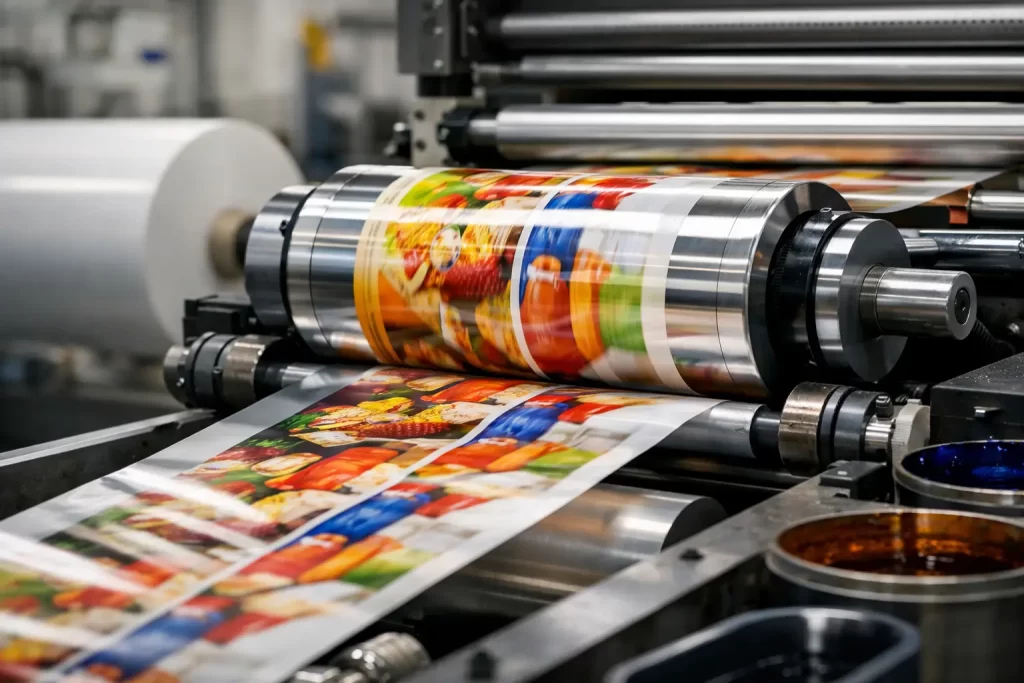
Flexographic printing is a rotary process that uses flexible relief plates and fast-drying inks to print on a wide range of substrates. In packaging, that range matters. Paper, films, foils, laminates, pressure-sensitive label stock, shrink sleeve materials, and certain board applications all demand different print behaviors, and flexography is valued because it can adapt across them.
Its core strength is production efficiency. Flexo presses are built for speed and consistency, which makes them well suited for long runs and repeat orders. For businesses managing multiple SKUs, regional variants, or regulated label formats, that consistency is often more important than novelty. The goal is not to produce a one-off visual effect. The goal is to deliver packaging that looks right, performs right, and arrives on time every time.
The process also supports practical packaging requirements beyond graphics alone. A flexographic job may include reverse printing, varnishes, tactile finishes, security elements, variable design structures, and adhesive-compatible constructions depending on the end use. That makes flexo relevant not only to marketing teams but also to operations and quality stakeholders.
Where flexographic printing for packaging fits best
The strongest use cases tend to be high-volume applications where print repeatability and substrate flexibility matter. Pressure-sensitive labels are a common example, especially in FMCG, food and beverage, home care, logistics, and healthcare. In these environments, label performance is tied to more than appearance. It must also resist moisture, abrasion, temperature changes, and handling throughout the supply chain.
Shrink sleeves are another strong fit, particularly when brands want 360-degree decoration and high shelf impact across shaped containers. Flexible packaging structures also benefit from flexography when runs are substantial and material demands are specific. Folding carton components, tags, and some specialty packaging formats may also be produced efficiently with the right press configuration.
That said, not every packaging project belongs on a flexo press. If a campaign requires frequent artwork changes, short runs, or highly localized variation, digital printing may be more economical. The right decision depends on run length, SKU count, turnaround pressure, substrate type, and the tolerance for setup costs.
Why converters and brand owners still rely on flexo
The continuing value of flexography comes down to a few commercial realities. First, unit economics improve significantly at scale. Plate costs and press setup require planning, but once production is running, the cost per label or package can be very competitive. For enterprises with recurring demand, this is a major advantage.
Second, modern flexo technology has improved print quality substantially. Better plates, tighter registration systems, advanced anilox rolls, press controls, and ink management have narrowed the gap in applications where image quality was once considered a limitation. Brands can now achieve strong color performance and clean detail while retaining the throughput benefits of flexo.
Third, flexography supports manufacturing discipline. Repeat jobs can be standardized, monitored, and quality-checked in a structured way. This is particularly valuable in sectors where compliance, barcode integrity, warning text, or batch identification cannot be compromised.
The trade-offs decision-makers should understand
Flexography is not the lowest-effort option. It rewards planning and punishes inconsistency. Plate creation, color matching, substrate testing, and press setup all require technical control. For businesses that order packaging reactively, without forecast clarity or artwork discipline, some of the method’s advantages can be diluted.
There is also a break-even question. Short runs with frequent versioning may not justify plate investment, especially if artwork changes are likely after approval. In those cases, a hybrid production strategy can be smarter than forcing every job into one print process.
Another trade-off is that packaging performance depends on the full construction, not just the print method. Ink selection, adhesive behavior, face stock, liner, curing, and finishing all influence the final outcome. A label that prints beautifully but fails in refrigerated storage is still a failure. That is why experienced packaging buyers tend to evaluate flexography as part of a system, not as a standalone capability.
Key factors that affect flexo packaging quality
Press technology matters, but process control matters more. Good flexographic printing starts before ink reaches substrate. Artwork needs to be prepared for the realities of the press, including line weights, trapping, registration tolerance, and substrate behavior. Expectations should be aligned early, especially for metallic effects, dense solids, or very fine reverses.
Material compatibility is equally important. Films, papers, and specialty constructions respond differently to ink and pressure. A packaging partner should understand how the chosen substrate performs during printing, converting, application, transport, and end use. This becomes especially important in food packaging, healthcare labeling, and logistics applications where durability and legibility are operational requirements.
Color consistency is another major issue for enterprise brands. Multi-site distribution and regional product launches often require the same brand identity across separate production lots. That is only achievable with disciplined color management, repeatable press settings, and strict inspection protocols.
Finally, finishing quality cannot be treated as an afterthought. Die-cut accuracy, adhesive integrity, sleeve shrink performance, lamination bond strength, and barcode readability all affect whether packaging works in the field. Procurement teams often focus on the visible print surface first, but real value comes from total conversion quality.
How flexography supports sustainable packaging goals
Sustainability discussions in packaging are becoming more technical, and flexography has a role here as well. The process can support material optimization, lower waste through controlled repeat production, and compatibility with packaging structures designed for improved recyclability. But sustainability claims should be approached carefully.
A print method is only one part of the equation. The environmental outcome depends on substrate selection, adhesive systems, ink chemistry, liner strategy, and the recovery infrastructure available in the target market. A package is not automatically more sustainable simply because it was flexo-printed.
Still, for brands moving toward lighter materials, better inventory discipline, and more efficient production runs, flexography can fit well within a broader sustainability program. The key is to treat sustainability as an engineering and supply chain issue, not a surface-level marketing statement.
Choosing the right manufacturing partner
The difference between acceptable packaging and dependable packaging usually comes down to execution. A capable flexographic supplier should be able to discuss run economics, substrate fit, application conditions, compliance needs, and quality control in practical terms. That conversation should be specific to your product environment, not limited to press features.
It also helps to assess how a supplier handles complexity. Can they manage multiple SKU families with consistent branding? Can they advise on security features, RFID integration, or specialty constructions when packaging needs go beyond basic decoration? Can they support forecast-based production without compromising lead times? These are the questions that matter when packaging becomes part of a broader operational system.
For many enterprise buyers, the best partner is not the one promising the widest set of claims. It is the one with stable process control, strong technical communication, and the discipline to deliver the same result across repeat orders. That is the standard companies such as Kimoha build toward because packaging performance is measured in the market, not on a sample sheet.
When flexo is the smart choice
Flexography makes the most sense when packaging needs to perform at scale with reliable quality. If your business depends on repeat orders, consistent brand presentation, material versatility, and production efficiency, it remains one of the most commercially sound printing methods available. If your needs center on rapid design turnover and low volumes, another approach may be better.
The right packaging decision is rarely about choosing the most talked-about technology. It is about choosing the process that aligns with your product, your supply chain, and your customer expectations. In packaging, the strongest results usually come from methods that keep working long after the design approval is done.