


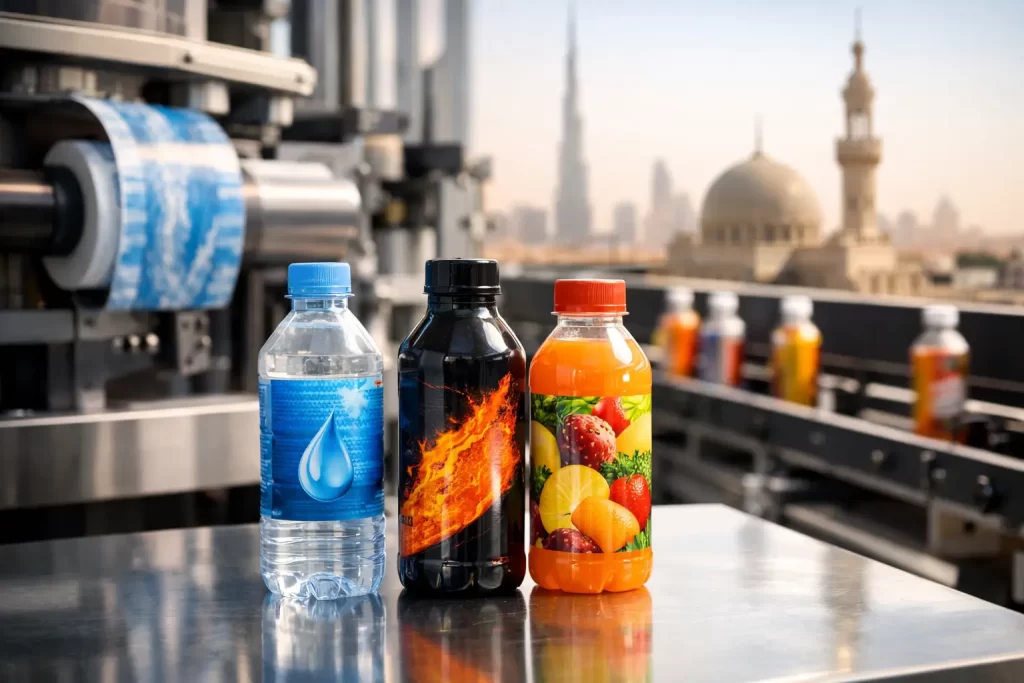
A shelf reset, a product launch, or a packaging conversion can put unusual pressure on label sourcing fast. When that pressure lands on containers that need full-body decoration, tamper evidence, or strong shelf impact, choosing the right shrink sleeve manufacturer Middle East becomes less about unit price alone and more about production accuracy, material fit, and delivery reliability.
Shrink sleeves sit at the intersection of branding and performance. They need to look sharp at speed, shrink consistently across complex container shapes, and hold up through filling, transport, retail handling, and end use. For procurement teams, packaging managers, and brand owners, the real question is not simply who can print a sleeve. It is who can produce sleeves that perform consistently in commercial conditions.
What makes a strong shrink sleeve manufacturer Middle East partner
A capable manufacturing partner brings more than printing capacity. The real value comes from controlling the details that affect sleeve behavior on line and on pack. That includes artwork preparation, color consistency, film selection, seam integrity, shrink performance, and the ability to match output to commercial timelines.
This matters even more in regional supply environments where buyers often need fast coordination across multiple SKUs, varied regulatory requirements, and mixed order volumes. One product line may need premium graphics for retail appeal, while another may need durability, traceability, or tamper-evident performance. A manufacturer that can handle both without forcing compromises is usually the better long-term fit.
Experience also shows up in the questions a supplier asks early. Container geometry, heat tunnel conditions, application speed, storage temperature, ink compatibility, and barcode placement all influence final performance. If those discussions happen only after production starts, avoidable waste usually follows.
Print quality is only one part of the job
Print quality gets attention first because it is visible. Brand teams care about sharp text, strong color reproduction, and premium shelf presence. They should. A shrink sleeve often carries the most prominent visual real estate on the package.
But good-looking sleeves can still fail in use. Distortion around curves, uneven shrinking, poor seam strength, and barcode readability issues can turn a visually attractive sleeve into an operational problem. The best manufacturers treat print design and application performance as one process, not two separate tasks.
That is where prepress discipline matters. Artwork must be adjusted for shrink distortion so logos, nutritional panels, and regulatory text land correctly after application. This is especially important for contoured bottles, jars, and specialty containers. The more complex the shape, the more critical the technical setup becomes.
A dependable supplier should also be able to advise on print technology choices based on run length, versioning needs, and design complexity. Flexographic and digital capabilities each have advantages. The right decision depends on the product mix, speed requirements, and how frequently artwork changes.
Materials, application conditions, and product fit
Not every shrink sleeve performs the same way, even when the printed design looks identical on screen. Film choice has a direct impact on shrink behavior, clarity, sustainability goals, and machine performance. PETG, PVC, OPS, and newer alternatives each come with trade-offs.
For example, one material may offer strong shrink characteristics for highly contoured containers, while another may support better recycling alignment or cost efficiency. The right answer depends on the packaging format and the brand’s priorities. If sustainability targets are rising, material selection should be part of the conversation from the start rather than treated as a late-stage substitution.
Heat tunnel settings and application conditions matter just as much. Sleeves that perform well in testing can behave differently in live production if line speeds, temperature control, or container tolerances vary. A manufacturer with real production knowledge will account for these conditions before recommending a structure, not after complaints appear.
This is one reason sector experience matters. Food and beverage lines may prioritize moisture resistance and shelf impact. Healthcare and personal care may require tighter attention to legibility, batch control, and packaging integrity. Home care and chemical applications may need stronger resistance to handling conditions and storage environments.
Compliance and consistency are procurement issues, not just quality issues
For enterprise buyers, sleeve performance is tied directly to compliance and continuity of supply. Packaging errors can delay launches, create relabeling costs, or trigger issues in regulated categories. That is why quality systems are not a background detail. They are part of commercial risk management.
A qualified manufacturer should demonstrate consistent controls around color standards, substrate handling, print registration, inspection, and batch traceability. This is especially important for brands running repeat orders across regions or managing multiple SKUs with similar designs.
Consistency matters more than occasional excellence. A sample that looks perfect is useful, but repeatable output over time is what protects operations. Procurement teams should ask how the manufacturer maintains quality between runs, across order volumes, and during schedule pressure.
Lead times deserve the same scrutiny. A supplier may promise speed, but the more useful question is whether that speed is dependable. Can they support urgent replenishment? Can they coordinate phased deliveries? Can they handle both high-volume core SKUs and smaller promotional runs without disrupting service? These are the details that affect plant planning and on-shelf availability.
Questions to ask before you commit
When evaluating a shrink sleeve supplier, the best conversations are practical. Ask how they manage distortion control on shaped containers. Ask what print processes they recommend for your run profile. Ask how they validate sleeve performance before scale-up. Ask what quality checks are standard and which are customer-specific.
It is also worth asking how they support change. Packaging rarely stays static for long. New SKUs, seasonal graphics, regulatory updates, and material transitions are common. A manufacturer that can absorb those changes without creating bottlenecks becomes far more valuable over time.
Regional service can also make a measurable difference. For buyers operating across GCC markets, proximity supports faster communication, better production coordination, and more responsive issue resolution. That does not automatically make every local supplier the right fit, but it often reduces avoidable delays and complexity.
Why manufacturing depth matters more than brochure claims
Many suppliers can present a broad capability list. What matters is whether those capabilities are integrated into a stable production environment. Printing, inspection, conversion, and delivery need to work as one system. When they do not, buyers often see the symptoms first as missed timelines, color drift, or performance issues on line.
A strong manufacturing partner combines equipment capability with process discipline. That includes prepress accuracy, controlled production workflows, inspection standards, and the ability to scale without letting quality slip. For large brands and fast-moving product portfolios, this depth is what turns a vendor into a dependable supply partner.
Kimoha Entrepreneurs FZCO operates in this space with a clear focus on industrial-grade labeling performance, combining advanced print capability with application-led thinking across multiple sectors. That kind of manufacturing depth is especially relevant when shrink sleeves must satisfy both branding demands and operational realities.
The best choice depends on your product and your risk tolerance
There is no single definition of the best shrink sleeve supplier for every buyer. A brand launching a premium beverage line may prioritize decoration quality and shelf impact. A healthcare manufacturer may care more about consistency, traceability, and error prevention. A high-volume FMCG business may need a partner that can scale quickly across repeating orders with tight timeline control.
That is why evaluation should start with the product environment, not just a price sheet. Consider container shape, line conditions, annual volume, artwork complexity, sustainability expectations, and regulatory exposure. Then assess whether the manufacturer can support that full requirement without creating weak points elsewhere.
The strongest partnerships usually begin with technical honesty. Good manufacturers do not pretend every material suits every application or every deadline can be compressed without consequence. They explain trade-offs clearly and help buyers make decisions that protect both brand presentation and production performance.
If you are selecting a shrink sleeve manufacturer Middle East, look for evidence of control, not just claims of capacity. The right partner should help your packaging run cleaner, look better, and arrive on time – because in competitive markets, packaging is not a finishing touch. It is part of how the product performs before the customer ever opens it.
